
Feed More, Waste Less, Kai Atu: Words That Capture the Future We Need
Every organisation has guiding phrases, but some carry meaning far beyond internal messaging. For KiwiHarvest, Feed More, Waste Less, and Kai Atu express both our purpose and the vision we believe Aotearoa can achieve if we treat food as the powerful connector it is.
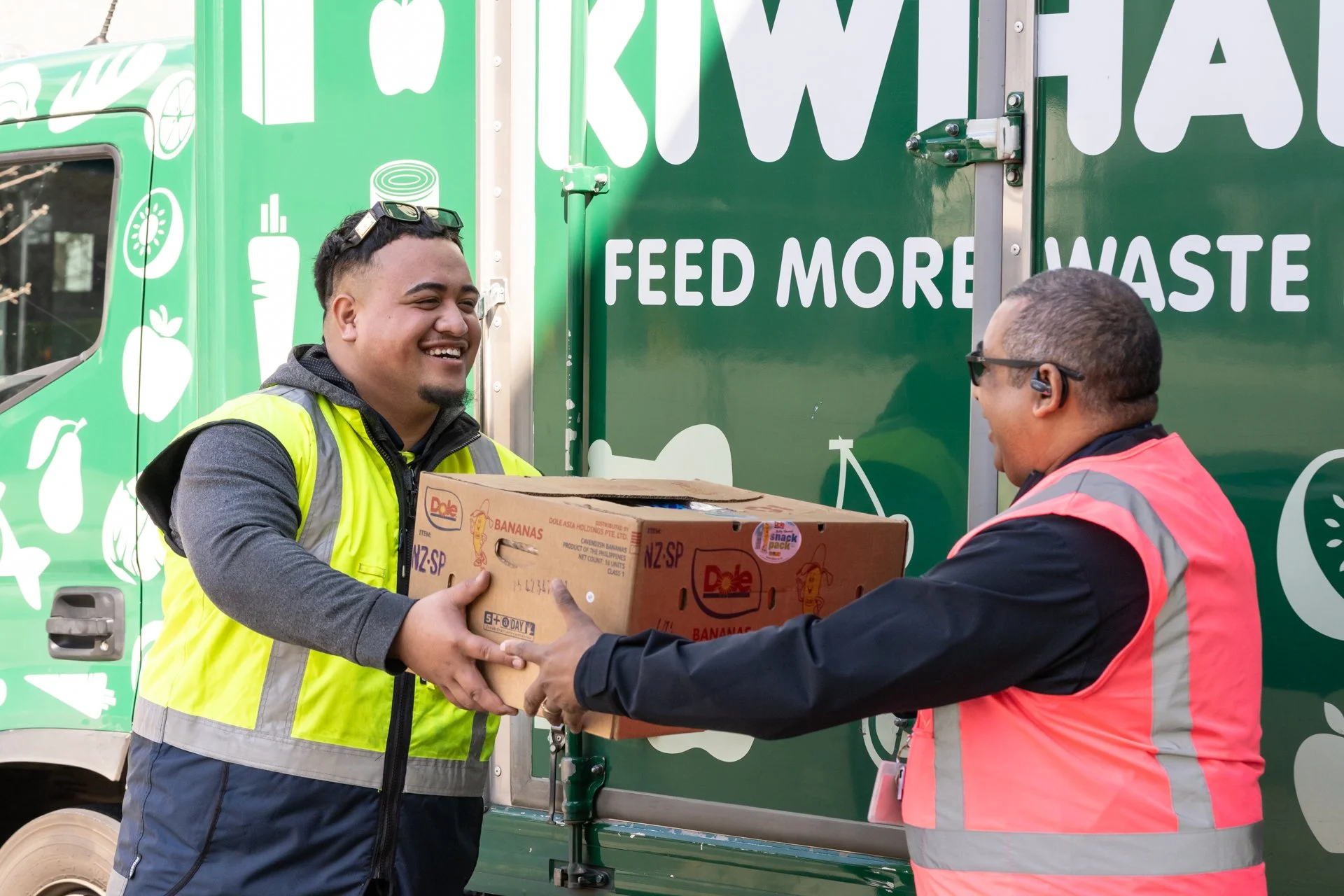
Feed More: Nourishing People with Dignity and Fairness
“Feed More” speaks directly to the realities facing many whānau in New Zealand. In a country that produces more than enough food, too many people still struggle to access nutritious kai. Feeding more is not simply about distributing surplus food. It is about ensuring dignity and fairness. It is about strengthening communities by making sure no one is left behind. When good food reaches the people who need it, wellbeing improves, resilience grows, and communities thrive.
In Aotearoa, over 21% of Kiwi children live in households where food runs out sometimes or often. Meaning they regularly worry about where their next meal will come from, even while good food is wasted elsewhere. KiwiHarvest doesn’t just distribute good surplus food, we work with community organisations and food businesses to ensure good food reaches the families in need.
Waste Less: Respecting Food and Protecting the Planet
“Waste Less” is equally important. Food waste remains one of the most unnecessary environmental challenges we face. Good food is discarded at every stage of the supply chain, despite the fact that many families are facing rising food costs and community organisations are experiencing unprecedented demand for food support. “Waste Less” calls for better systems, better planning, and better habits across every part of our food system. It acknowledges the significant environmental impact of wasted food and the responsibility we have to prevent it.
When food is wasted, it’s not just the food itself that disappears, all the resources that went into making it go to waste too. Think about what’s involved in getting food from a farm to your plate, water to grow it, land to plant it on, fuel to transport it, energy to process it, and people’s time and expertise to harvest, pack, and distribute it.
When perfectly good food is thrown away before it’s eaten, all of those inputs are wasted as well. This means the water, energy, and land that helped produce that food never delivered the benefit they were meant to - nourishment for people. From an environmental perspective, this adds unnecessary pressure on natural systems and increases emissions across the whole food chain. In New Zealand, an estimated 402,000 tonnes of food is wasted each year, and 60% of what goes to landfill is still perfectly edible. When that food is discarded, all the resources used to grow, produce, and transport it are lost as well. By preventing good food from being thrown away, we can lower emissions at every stage of the supply chain, conserve valuable resources, and design a system that values food properly.
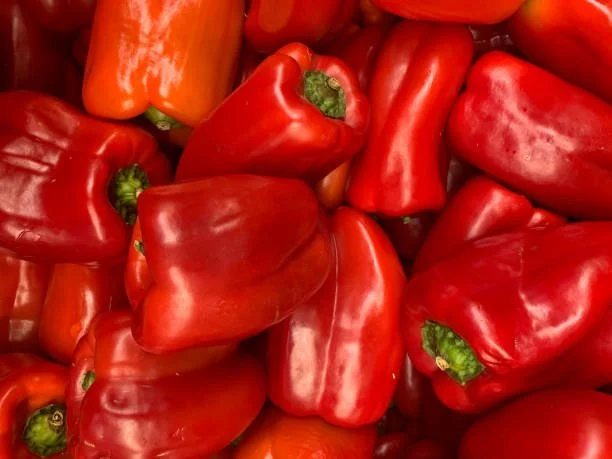
At KiwiHarvest, reducing waste is at the heart of everything we do. Every day, our volunteers, food rescue drivers, and logistics team work together to rescue good surplus food from supermarkets and food producers that would otherwise go to landfill. In 2025 alone, our branches across the country delivered an average of 745,000 meal equivalents (450 grams) per month, preventing 1,005,750 kg of CO₂eq emissions from entering the atmosphere, showing that rescued food is not just feeding people, it’s protecting the planet too. Initiatives like our partnerships with major supermarkets and food producers ensure that perfectly good food is redirected to community organisations and families in need, rather than being thrown away. Reducing waste isn’t just about environmental impact; it’s practical and economic, too. By rescuing food that would otherwise be discarded, KiwiHarvest works to rescue good surplus food and deliver this good food to families in need.
Kai Atu: Sharing Kai with Generosity and Care
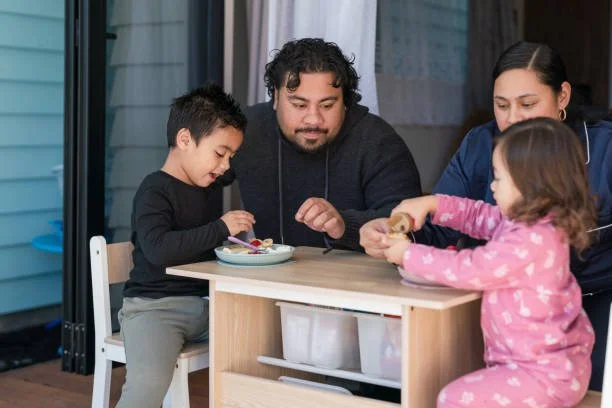
“Kai Atu” brings cultural meaning to these goals. Kai Atu refers to giving or sharing food forward. It reflects manaakitanaga, the commitment to care for others, and uplift community wellbeing. It reminds us that food is not only a resource. It is connection, relationship, and culture. Sharing kai is an act of respect. It strengthens bonds and reflects the values that sit at the heart of Aotearoa. “Kai Atu” calls us to act with generosity, purpose, and care. Together, these three phrases provide a clear direction.
A Clear Direction for a Fairer, More Nourished Aotearoa
Together, these three phrases provide a roadmap for the future:
“Feed More” guides us to prioritise people.
“Waste Less” guides us to respect resources and protect the environment.
“Kai Atu” guides us to uphold values that honor both people and place.
The challenges in our food system are significant, but the opportunity to transform it is within reach. If we commit to these principles, to FEED MORE, WASTE LESS, and KAI ATU, we can create a future where abundance is shared, waste is prevented, and communities are strengthened.